The Future Of Art
Friday, November 28, 2025
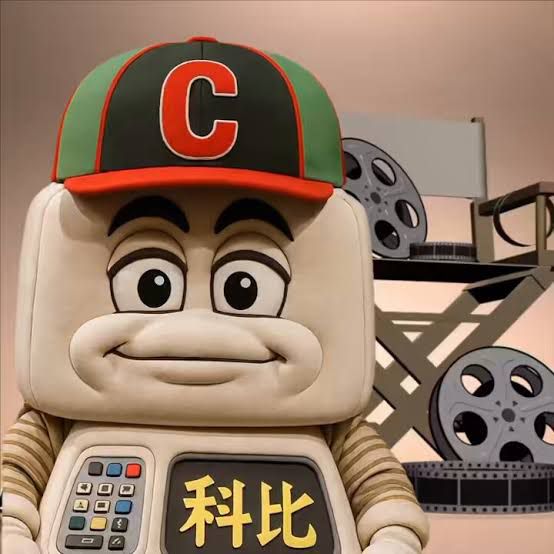
This very very cute stuffed anthropomorphic computer is called Colby the Computer. This particular version (bis) is a rendition by hyperreal artist Prognoz Pogodi, using an array of mysterious AI tools including ElevenLabs and Kaiber Superstudio. There is an incredibly comprehensive overview of Pogodi's previous social media activity and artistic endeavors written by Shel Raphen. I will be referring to this text extensively so I recommend a short skim before continuing. The objective of this article is to first provide a review and (mostly positive) critique on Prognoz Pogodi's more recent work. The second concerns the future of art in a world of hyperreality and simulacra.
Colby is the titular mascot of the 1990s cheesy Christian TV show Colby's Clubhouse. As per Wikipedia, Colby has the entirety of the Bible "programmed" into his memory. The show itself isn't very noteworthy, it aired on Saturdays from 8:00 to 8:30 PT on the televangelist owned Trinity Broadcasting Network, and often featured life lessons about God and how to respond to "contemporary" situations as per the enlightening Lord's way. You can easily find episodes on YouTube. If you do, you will notice that the original Colby doesn't look identical to (bis) Colby, who is an AI generated version. CathodePlayer made a 3D Blender model, faithful - lol - to the original, available on ArtStation. Pogodi's AI generated version looks more like a Barney suit than the original, and has the words - 科比 - written on his screen, Chinese for Kobe or Colby. Xiaohongshu!
It is now appropriate, I think, to explain what is it exactly that Pogodi does. Prognoz Pogodi is a Self Media: a TikTok, Instagram, YouTube, Twitter account that posts absurd Reels. We will delve into the specifics later, but it essentially consists on characters, one of such being Colby, narrating videos of assorted origins in English, with overlayed Chinese and/or English captions. The character is physically present in the video, with their voice and appearance being AI generated. As the grammatical category implies abundance, there are other performing protagonists in Pogodi's creation. The one that brought them [1] the most relevance was Fiveish, a five dollar bill, mascot to an Orthodox Jewish kiruv organization called Oorah. You will notice the conspicuous Abrahamic knot that couples these characters together. Following the YapDollar fiasco [2], Pogodi introduced Gerbert, the puppet mascot of a - you will never guess - Christian show called Gerbert. It is August 20, 2024. From the YapDollar thread we can find Pogodi's reddit account i24News. They reveal in one comment that a considered replacement for the esteemed Fiveish could have been Elmo's father Louie. Pogodi opted to continue both the puppet and the religious subtext with Gerbert. Colby was introduced on September 27, 2024, whom you all now know and adore. This Colby looks quite a lot like the original.
We are now of course missing a Muslim puppet to complete the trifecta. Maybe Adam's World? Maybe Prognoz respects aniconism. We know that Brother Colby aka Omar had a Muslim spiritual awakening that shook his beliefs to the (multi) core. We also know Colby and Gerbert tackled the hurtful use of the n-word within the context of Islam in the very famous Quran Corner. By now I hope you have seen at least a couple of these videos. Pogodi's hyper Decadent Post-Internet style re-represents jarring artificiality: beautiful untrue beings and sayings of anxious design. Tracing back their accounts, especially on reddit, we can find that Pogodi is a devout follower of the Cum Town podcast and all their fellow ironic associates. The Cummiverse (The Adam Friedland Show, Chapo, Red Scare, etc) podcasts have over their unfortunate existance received many quirky guests, some of whom end up in Pogodi's videos. They are, images of themselves, imitations created on human instruction by inhuman devisings. In a society in which both the rate and speed of consumption accelerate, the seventh art cycles back to its original forms via indeterminate flashes. Our minds perceive the outside world through screens that seek to imitate the nature of thought: infinitesimal sensations and images. And, building a bridge, religion is the primordial image - nobody has seen or talked to their gods. Whenever we converse with divinity, we converse with the image we have created in place. The gods are the images where we find them in. Where we place them. As I will explain later, images are crucial in our understanding of this type of undertaking. It is then not a surprise, no wonder, that religious figurines are protagonists of the ironic social media fabrications of Pogodi.
I want to delve deeper into the artform. Pogodi usually takes original Reels - recipes, farm life hacks, etc. - from various sources, TikTok or Xiaohongshu, and extracts the script of said video. If the original video is in Chinese, then they translate the script into english. I suspect and agree with Raphen that Pogodi tampers with these a little to make them seem more spontaneous and turbulent. They then have these fun characters recite the script, Colby, Gerbert, Dasha, Steve Harvey, OJ Simpson, Žižek, Eric Adams, the NYU guy, and other characters from Cummiverse bits. On top of the video you will find captions for what they are saying in chinese, and usually english captions as well. These videos are all parts of a compilation called the Prevue Guide Channel (PGC). I am particularly interested in reviewing a subset of videos from this collection. On April 4, 2024 [3] we were introduced to (bis) Colby in a video that reveals that the Annunaki removed chromosome number two, and fused it together with two telomere caps. I want you to notice a couple of things. This (bis) Colby has only ever appeared in these types of videos, and another one that I will mention later. The common theme here seems to be awakening. All sorts of conspiracies are involved, usually involving consciousness, aliens, planes of existance, spiritual unity, and other esoteric machinations. Much like their other videos, these scripts are not of original design. However, all of these videos have been taken from english speaking conspiranoids and charlatans. I have downloaded four sets of examples so you can see for yourself what I mean. This absolves me from writing close readings, which are the bore of cultural theory.
My partner loves to tell me that great artists steal all the time. I have always thought this to be good practice. She owns Steal Like An Artist by A. Kleon, which I believe might have led to attempting the following exercise: writing a poem taking lyrics from songs that we like as verses. This was a complete failure. Not everybody can be an artist. All of art is self referential - think of intertextual literature: Ulysses, Borges, The Djinn in the Nightingale's Eye, etc - and to create is to reinvent what has already been created with the lense of contemporary context. Jonathan Lethem writes "The kernel, the soul — let us go further and say the substance, the bulk, the actual and valuable material of all human utterances — is plagiarism". This phrase is taken from Mark Twain's 1903 letter to Hellen Keller. And yet, its meaning is transformed into something else: a different purpose. It is evident that Pogodi's main quality as an artist is the original soundtrack produced in all their videos. Everything seems to indicate this is human made. A lot of these short, original songs are available on streaming platforms. The music is jarring, eerie, and beautiful still. Yet, very few commend or interact with the real - human artistry behind these videos. Why? Maybe most don't notice. There exists an irrational distaste concerning anything that is AI adjacent, but many videos making its use go viral, and there exists a non-trivial niche community that approves. What is the difference between capitalist slop and inventive visions that are by and medium-large welcomed by the Internet? The answer is extremely simple: transformative intent. People are not stupid. It is not the same to be ironic, in the way the PGC is, than to be genuinely serious and try to make a trash ass, goofy ass, soulless AI movie or commercial that displaces humanity. It is this, that causes discontent, it is obvious that robotic gentrification of artistic labour will be repudiated by the subset of the proletariat composed of creatives. Cutting Minecraft blocks or clouds does not supplant human jobs [4]. Coca-Cola, Marvel, and others firing artists to create the biggest pile of dogshit you have ever seen in your life do displace jobs. DC Barker (tic) said this better than I ever will "The issue is not AI art itself, but that AI art is trying to imitate the non-AI art or world. AI art should do something novel, transcendent, not recapitulate human production. The negative reaction is thus more about the production of a simulacrum, not the innovative itself". It is then very clear why Pogodi, and so many other AI TikTokers or artists fit this novelty narrative.
On the content itself, there are additional underpinnings as to why I value Pogodi's work especially. People commenting usually will say these videos are sleeper operative activations, or induce psychosis - schizophrenia, or comparable observations. They (the audience), by believing this video will cause psychosis, are retroactively diagnosing psychosis to the society were these are original thoughts from the people who posted first (the bottom row). Many of the originals have more views and exposure than the PGC copy. It is then, not the nature of the message that is indivually psychotic, but the semiotics of its presentation that generate improbable unease. Colby (bis) is a copy without true original, who speaks the words of those experiencing altered perceptions of reality, already ingrained in the simulacrum. The idea is irrelevant. This society of symbols is born to the speed in which content is created, where also the rate of consumption goes up, and thus the image is processed instantly and defines a cultural instant, over any text or music or video that require attention and discernment. Colby, the copy, is in reality the original through its creator. There is a double steal in this sense, from the idea that the Red Scare podcast is a psyop, one would think that Prognoz was inspired by this idea, and then the interest in the psychosis is natural. This is not the case. Pogodi has been schizoposting all their life. It is then another retroactive action, the second steal is making videos that present themselves as a psyop, feigning inspiration from such content, when the original thought is the creator themselves. We do not know why Pogodi acts or behaves like this. The motive seems to be very simple, and yet there exists a sort of very timid and modest self awareness of how meta the effort is. This is present in what is perhaps my favorite video from this collection, the behind the scenes video featuring both Colby and Gerbert. Wow! We had big plans for the Egypt video!
To understand the texture of Pogodi’s casting choices, we must examine the ideological genealogies of the figures being reanimated. One of their first victims of abnormal montage is Anthony Morrison, who seems to be a spiritual grandfather of figures like Gary Vaynerchuk or Tai Lopez, who themselves influenced the likes of Andrew Tate, and other online course sexist sellers. How similar are these people to the dirtbag left podcasts that have inspired Pogodi? One would think there is no intuitive resemblance. This is only true if you have childlike dialectics. The watershed is clearly the non anti-capitalist rebellion against the system of consumer society, one strand is focused on the sign-value of communication: perverse provocation of the respectable classes, and the other on the sign-value of commodities: the imagery of prelapsarian Keynesian consumption in the postwar economic boom. How to become free from the Matrix, or how to learn to love the hustle and grind. For this last group the paradox is evident. Can you see it? It is within the signifiers of cultural commodities that we encounter the answer, the market driven progress on liberal values is viciously rejected by anti-egalitarian neoreactionaries, the Dark Enlightened or Foundationalist or Groyper jingoist losers who would be but peasants without the progress they so desperately desire to destroy. They are nothing without the status code for conspicuous luxury and the modernist welfare state. A hatred for hierarchy only insofar as they are not involved. This is the deep contradiction at the heart of these ill-described anti-globalist conservative movements. To exist, they need this very facet of neoliberalism, and thus, can not be anti-globalist at all. The economic agenda of the current administration is all the evidence that is needed to realize this. It reeks of hypocrisy and paradox. And, put in a similar position, the same reactionary groups that we just mentioned would capitulate instantly to the powers that be, and thus the distinction between the new and the old order are primarily semantic. How can they possibly claim to want to return to the Archaic, and yet arrive to the Spectacle deprived of Mauss' gift? A replication sans reciprocation is the foundation for revolution. Then, while ideological distinctions exist between bigots, it is like entering a bar and sitting at the table of a Leninist, a Dengist, and a Trotskyist. It is almost surely a Communist bar.
There are a number of leftist signifiers in the video imaginaire. Think of the Quran Corner's interpretation of how hurtful and immoral it is to joke with the now reappropriated N-word. This can be suggestive of a leftist critique of the centrist notion of what the liberation of opressed people looks like. It is a simulacrum of emancipation which has no resolve of menacing the material basis of the capitalist social order or its teleologies of violence (Khatib, 2024 pp. 28-29). Pogodi's podcast insiprations seek to make fun of such a farcical idea of progress, and are thus very offensive to the American liberal, who shares essence with their conservative counterpart; in it that they are both, save for this simulacrum of tolerance, neoliberal imperialists. It is the reapropriation of lewdness and decorum, and thus moral provocation. Did we not want art to disturb? This is what I find to be so great about Pogodi's art, it navigates through very thin lines, on very controversial issues, using very controversial means, and we are always on our toes as to what to believe. There is a Lynchean obsession with the dense semiotic, the conspiracy, the deception hidden in plain sight, the macabre quasi-ritualistic.
Nobody should be surprised with the rise of the fascist far-right throughout the West. The centrist neoliberal is the best friend of the fascist. He invites him to debate, and has an extravagant dinner served by the margins as waiters. To arrange existing conscious beings is to place them in relation. When such an arrangement is exclusionary, it is immoral because it categorizes ontology from the exterior based on non categories. Because this violence resists no power structures of domination, it is clearly unjustifiable. This assumes that to be moral is to not miscategorize relation conditional on material structure, and that categories are not symbolic. We will discuss this elsewhere. These alt-right fascist white supremacists, or whatever you may want to call them because they are all the same to me, sit behind many, also ill-described, innovations that form the core of the AI insurgence. We have spoken before of labor displacement in the arts. The entire purpose of AI is to make away with the working class. All struggle is class struggle, and as such we can pinpoint a very particular example that ties in nicely to what has been previously discussed, and that is the sexist fragment of this ideology, the worst ideology maybe anybody has ever seen. While there are humans perpetuating such advances, it is the reproduction of the economic simulacrum that is at fault: hyperreality is the playground for the exchange of commodities, in the sense of Sohn-Rethel's real abstraction: sie wissen es nicht, aber sie tun es. Nevertheless, this mistifies critical inquiry into the capitalist mode of production (Manning, 2025 pp 46). It is a classic exercise of reason to identify the people involved and their actions as misogynist. This is very easy to see, whether from the likes of the commodity rebels from the previous paragraph or from the far right leaders on the verge of global dominion. The progress that capitalism has provided for the liberation of women, while a material upgrade, remains merely an illusion. Women at the workplace have been assigned by this amorphous bourgeoisie the patriarchial caring roles and emotional responsibilities they have for so long performed in the domestic setting, all without emancipation from the latter. Their labor is insulted socially and denominated as lazy girl jobs, where the gender divide is notable. This notion is incredibly sexist, because it is all white collar jobs that are fake in consumer society. In order to revert to a feudal or pre-global world, as is desired by fascist neoreactionaries, it is necessary to increase fertility, and thus remove women from the workforce. AI then has been deployed as to perform HR and administrative duties, which we have seen are performed mostly by women. Therefore, this profit incentivized innovation exists to demolish the working class, and with respect with women, to additionally emulate them sexually, and find in the simulacrum a way around consent. We know this from the symbolic signaling which evidences that this tool was conceived to be anti-feminist and anti-women. This is where I break with many Marxists, who cleanly identify political correctness as a tool for division, but by declining its importance to identity, participate in the disunion of the working class and the global leftist movement. The future WILL be woke, or it will be controled by techno-totalitarian monarchy. It is only by correlating preferences through identity that we can reach non-utilitarian allocations of social ownership.
I posed the question of the future of art. The future of art will be whatever the future of society is. The working class can trivially understand why AI is used to wage war against them, but can sometimes not identify its use. This is why artists like Pogodi who reappropriate and repurpose such contraptions are so important. Why is it that such efforts based on simple motives are not considered art? Why is it a lower art form? Why is it that some visual artists [5] are celebrated by the intelligentsia in Modern Art museums while others are ridiculed on the basis of a lack of substance? If you are seeing anything at all, chances are, Pulitzer or not, that the political concessions to the apparatus are in essence almost identical, and are thus both, lacking in substance regardless. Then, popular art that is consumed by the working class is not lower, but of equal value. I have left a couple of banger comments on many Colby reels. This does not put me in the artist mind, but I do feel I can surf the wave of the vibe. Can you find which of the four Colby originals I tagged Pogodi on?
What happens to reality when the symbols it worships do not have a referential origin? Baudrillardian notions of hyperreality are defined as meticulous replication of the real, through reproductive medium. This picture is not a picture of Colby the costume from the TV show. It is a picture of Colby, the animated product of a prompt by Pogodi, edited to perfection over different backgrounds. What is there left but to keep creating new realities, to rebel against the real, when the cyclical nature of progress is revealed. C'est désormais la carte qui précède le territoire. But, it has been this way for decades, centuries even. What does Generative AI say about perceptions it can so easily reproduce? Is it not testament, that such categories where always illusionary? There is no Colby. There never even was a real Colby to negate. I digress that the collapse and previosuly mentioned substitution of the referent are contradictory within the simulacrum. There is no correspondence between the real and its image. This is why we should not be surprised at these technological advances. It is merely the next step in straying the media consumer farther from signified reality, and unto the simulated one they have always known. AI is the new Disneyland, presented as imaginary in order to make us believe that the rest is real, when in fact all [...] surroundings are no longer real, but of the order of the hyperreal and of simulation.
The artist is not the one who creates the work.
I want to close this comment on the code of status. We previously mentioned advertisement as the clear source of angerness from the working class, and how the women in charge are displaced. This effect has a magnitude of two orders, the first is the complete capitulation to Advertising as a commodity, it is not its very existence that we question but its replication. The second is that it presents a very vigorous level of irony. And this Pogodi has understood. At the time of my writing, Colby and Gerbert have now featured in their very own advertisements, a parody not of contemporary advertisement, but its use of AI. Pogodi regularly interacts with followers in the comments, not only presenting an image to society, but allowing it to become real within the walls of the viewer's mind. We are all invited to participate, we are all friends of Colby and Gerbert and by taking the other's words, we are in a sense talking back to the self in communion.
Notes
Bibliography
Badiou, A. (1993). Ethics: An Essay on the Understanding of Evil. United Kingdom: Verso. ISBN:9781859844359, 1859844359.
Baudrillard, J. (1968). The System of Objects. United Kingdom: Verso Books. ISBN:9781788739436, 1788739434.
Baudrillard, J. (1972). For a Critique of the Political Economy of the Sign. United Kingdom: Verso Books. ISBN:9781788734837, 1788734831.
Mauss, M. (1925). The Gift. United Kingdom: W.W. Norton. ISBN:9780393320435, 039332043X.
Manning, F. T. C. (2025). On the bourgeois concept of real abstraction: For a non-dualistic ontology of capital. Radical Philosophy 219, 42–53.
Khatib, S. (2024). Against singularity: Palestine as symptom and cause. Radical Philosophy 216, 21–33.